Krenkerup er en gammel hovedgård, som nævnes første gang i 1330.
Krenkerup har siden 1739 været ejet af efterkommere efter General Christian Detlev lensgreve Reventlow og hustru Benedicte Margrethe Brockdorff
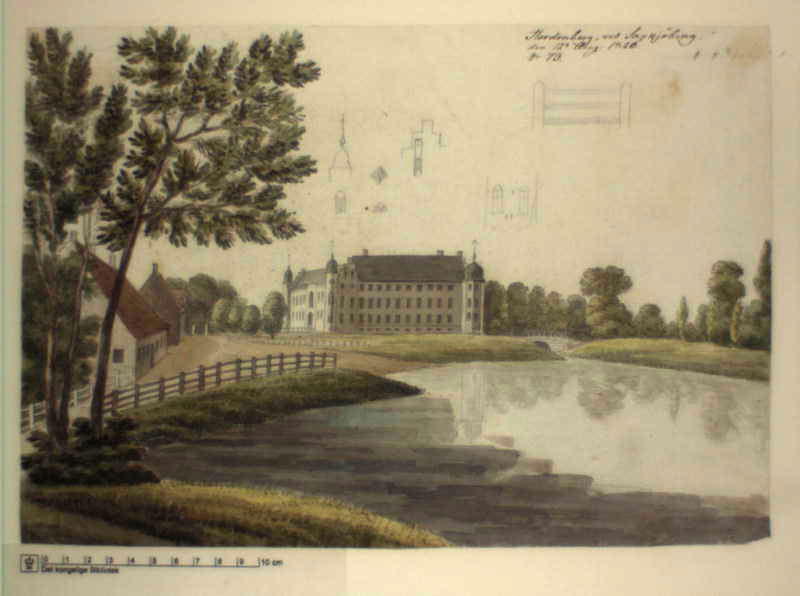
Krenkerup blev kaldt Hardenberg fra 1815 til 1938. Gården ligger i Radsted Sogn, Musse Herred, Maribo Amt, Guldborgsund Kommune. Hovedbygningen er opført i 1490-1510 og ombygget i 1620-1631-1689-1780-1815.
Krenkerup Gods er på 3700 ha med Sæbyholm, Idalund, Rosenlund, Nørregård, Nielstrup (Guldborgsund Kommune) og Christiansdal.
Dyrmann, Kristine: Hoffraktioner og kvindelige politiske netværk: Kvinder fra eliten ved det danske hof i en urolig tid, 1784–1797
Engelsk artikel med titlen: Court Factions and Female Political Networks
Uddrag af "Courts and Politics in an Age of Turmoil, c.1780–1830"
Abstract
A bloodless coup d’état brought Frederik VI of Denmark to power in 1784, while he was still a crown prince. With it, a new faction of courtiers supporting him also took power. This faction comprised men and women whose letters reveal the importance of sociability, family ties, and personal relationships in everyday court politics. Family connections, inheritance, and personal relationships were politically important not only for competing royals but also for courtiers and their families. This chapter examines how a group of women at court tried to strengthen their family networks through participation in courtly sociability; this included the introduction of a daughter at court during the social season, hosting a ball, and organising family activities that brought together their own children and royal children. The crown prince grew older and became more independent whilst the European continent was upended by revolutionary wars. To navigate these tumultuous times, seeking alternative ways to access the ruler became increasingly important to his courtiers. The chapter sheds light on the intricate ways in which family, personal connections, and political interest entwined at court in a time of upheaval.




 1748 - 1827 (79 år)